
At a Glance
- The Pause. Give your nails three to seven bare days between sets. Feed them jojoba oil the whole time.
- The Save. Stop a split from spreading tonight with a teabag and a drop of glue.
- The Shield. File in one direction with a glass file. Gloves on for dishes and cleaning.
How to Care for Your Natural Nails Between Sets
Most of the damage to your nails doesn’t happen in the salon chair. It happens in the two weeks after, when nobody’s watching. Whether you’re taking a break from acrylics, growing out a bad set, or just tired of your nails snapping at the corner, the habits below fix that.
A full acrylic fill runs about $45. Most of that pays for someone’s time, not a fix you can’t do yourself. This guide covers the daily habits that build strength, plus what to do the night a nail actually cracks.
How Do You Care for Your Natural Nails Between Sets?
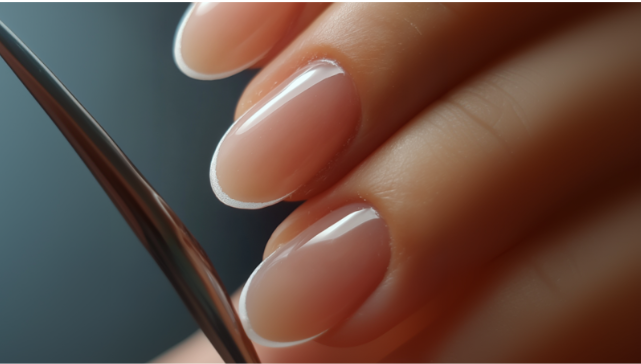
Between gel, dip, or acrylic sets, your nails need buffing, oil, and a real break. Skip any one of the three and you’re peeling again before your next appointment. Here’s the order that works.
1. Buff away leftover residue, gently
Don’t scrape or peel off stubborn glue or gel. That tears the top layers of the nail off with it. Use a soft, high-grit buffer, 220-grit or higher, and smooth the surface instead.
2. Rehydrate with an oil that actually gets in
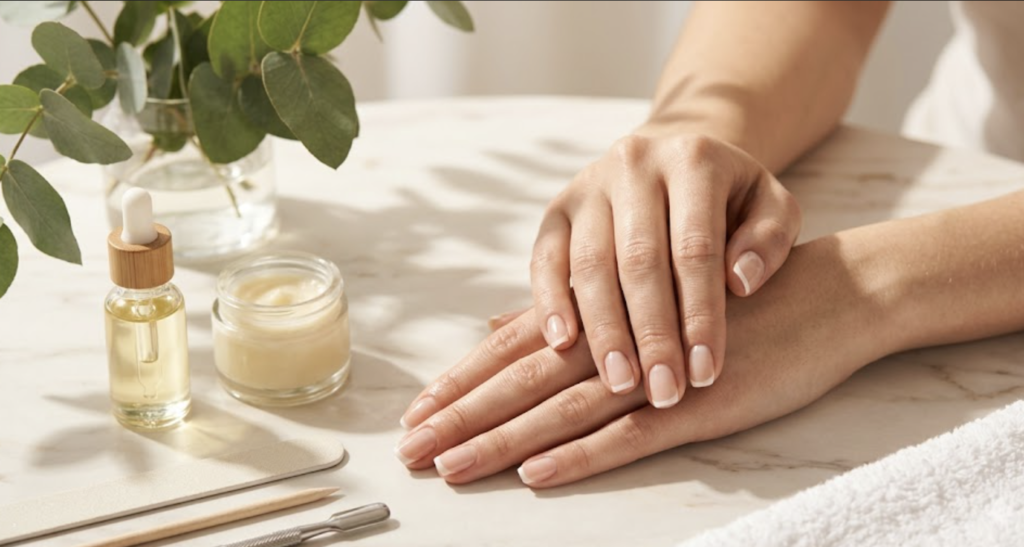
Acrylic and acetone removal leave your nails dried out. Apply cuticle oil with jojoba oil or sweet almond oil twice a day. Both have small molecules that can move into the nail plate instead of sitting on top of it.
3. Keep the length short and rounded
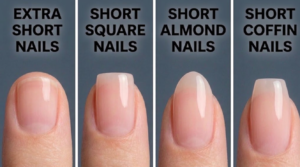
Dehydrated nails chip and snag more easily. File down to a short, active length with rounded edges. Less length means less surface area for a crack to start.
4. Take a real nail holiday
Leave your nails bare, or with just a nourishing treatment, for three to seven days before your next appointment. This is the step people skip and the one that matters most.
How Do You Repair a Cracked Nail at Home?
You can save a split nail without touching the other nine. The fix is a teabag, some nail glue, and ten minutes.
The Emergency Teabag Repair
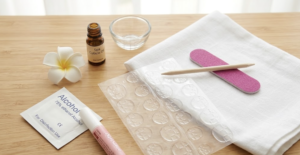
- Clean the nail. Swipe it with rubbing alcohol to clear off dirt and oil.
- Cut the patch. Cut a tiny piece of an unused paper teabag, or a coffee filter, to match the size of the crack.
- Glue it down. Put one drop of cosmetic nail glue over the split. Place the paper patch on top with tweezers.
- Seal it. Brush a thin layer of glue over the patch and let it dry all the way.
- Buff it smooth. Buff the dried patch flush with the rest of the nail, then add a ridge-filling base coat.
One thing to skip: superglue. It’s not built for skin contact and it doesn’t flex the way cosmetic nail glue does. Use the real thing.
How Do You Strengthen Natural Nails?
Thin, bendy nails aren’t a life sentence. They’re a sign the structure needs rebuilding, and that takes a few weeks of consistent habits, not one product. Here’s what actually moves the needle.
1. File in one direction only
Sawing back and forth with an emery board creates tiny shatters along the edge, and that’s where peeling starts. File from the outer edge toward the center in one smooth stroke, and use a glass file if you can.
2. Wear gloves for wet chores
Nails swell when wet and shrink when they dry, and that cycle breaks down the bonds between nail cells over time. Wear rubber gloves for dishes and cleaning with anything harsh.
3. Use a keratin treatment daily
Look for a treatment with keratin or protein in it to build a physical layer over the nail. Skip anything with formaldehyde. It hardens nails past the point where they can flex, and hard nails that can’t flex are the ones that snap.
4. Don’t forget flexibility
A strong nail still needs to bend a little to absorb impact without breaking. Massage oil into the nail matrix, the area just below the cuticle where new growth starts, to keep new cells hydrated from the beginning.
5. Feed your nails from the inside
Nails are built from what you eat, not just what you put on them. Getting enough of the right vitamins and minerals feeds the matrix directly.
| Nutrient | What It Does | Good Sources |
| Biotin (Vitamin B7) | Builds thickness, cuts down on splitting | Eggs, almonds, sweet potatoes, oats |
| Iron | Prevents spooning and vertical ridges | Spinach, lean red meat, lentils |
| Protein | Supplies the amino acids nails are made from | Chicken, tofu, Greek yogurt, fish |
Verdict: None of this replaces a real break between sets. Oil and diet help the nail you’ve got. Rest is what lets it rebuild.
FAQs: How to Care for Your Natural Nails
How do you hydrate and care for your natural nails daily?
Apply cuticle oil to your nail beds twice a day, morning and night, and use hand cream after every hand wash. Stop using your nails to open cans or peel stickers. That’s where most day-to-day damage starts.
How long does it take to repair damaged natural nails?
A full nail takes three to six months to grow out from the cuticle to the tip. You can smooth surface damage right away with hydration and gentle buffing, but anything deeper has to grow out. There’s no shortcut for that part.
What causes natural nails to peel and split?
The usual causes are too much water, harsh chemicals like acetone or cleaning products, rough gel removal, or a diet low in biotin and iron. Most peeling traces back to one of these, not bad luck.